

The SACLANT ASW (Supreme Allied Commander, Atlantic Anti-Submarine Warfare) Research Centre, predecessor of today's CMRE, was commissioned on May 2, 1959, in La Spezia, at Italy's eastern naval compound. The flags of nine NATO nations, the Centre’s first operational partners, and the NATO banner were raised. Admiral Jerauld Wright, SACLANT, endorsed its creation in June 1958 as a scientific NATO body under his command, with initial funding from the United States. The Centre was established to provide scientific and technical advice to SACLANT in the field of anti-submarine warfare and to respond to the needs of NATO nations and maritime commands.


During the 1960s, the SACLANT ASW Research Centre maintained its core mission on anti-submarine warfare amid Cold War tensions. To bolster at-sea experiments in underwater acoustics and oceanography, the old freighter SS Aragonese was repurposed as the Centre's first dedicated research vessel. This platform enabled critical trials in the Ligurian Sea, supporting NATO's evolving anti-submarine warfare tactics and sensor development.
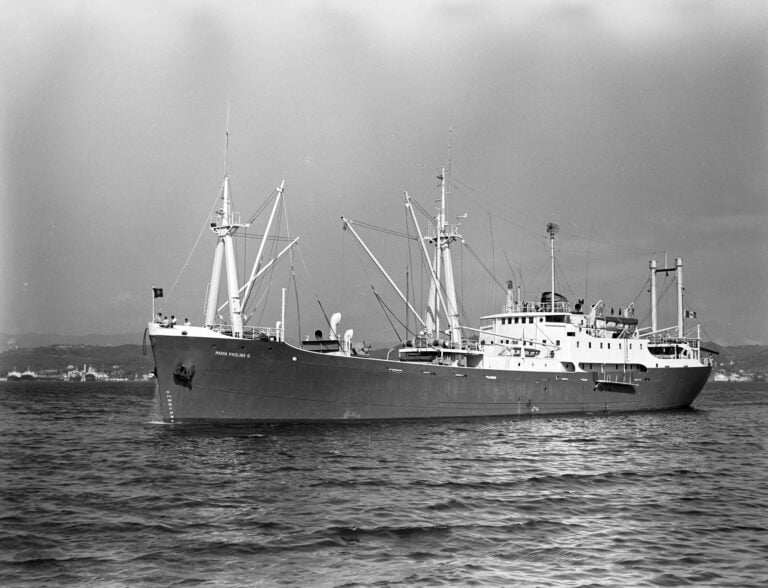
Maria Paolina G., a converted merchant ship of 2000 gross tonnage, replaced the S.S. Aragonese. The new vessel could accommodate 16 scientific and technical staff. Her cargo holds were converted to laboratories, including a centre well for the lowering of large underwater equipment. An oceanographic laboratory was built on deck for taking hydrographic casts, and booms and A-frames mounted in several positions to permit the handling of bulky equipment over the side. The ship’s navigational equipment was augmented by the addition of a radar and a LORAN-C installation capable of digitally recording the ship’s track.

In this decade, the SACLANT ASW Research Centre intensified efforts on submarine detection in shallow waters, recognizing their tactical importance to NATO operations. Research pivoted to shallow water oceanography and acoustics, addressing propagation challenges unique to coastal environments. The Centre initiated the development of high-fidelity acoustic models, which were made available more widely to researchers. This work reinforced anti-submarine warfare effectiveness against quieter, more advanced Soviet submarines.
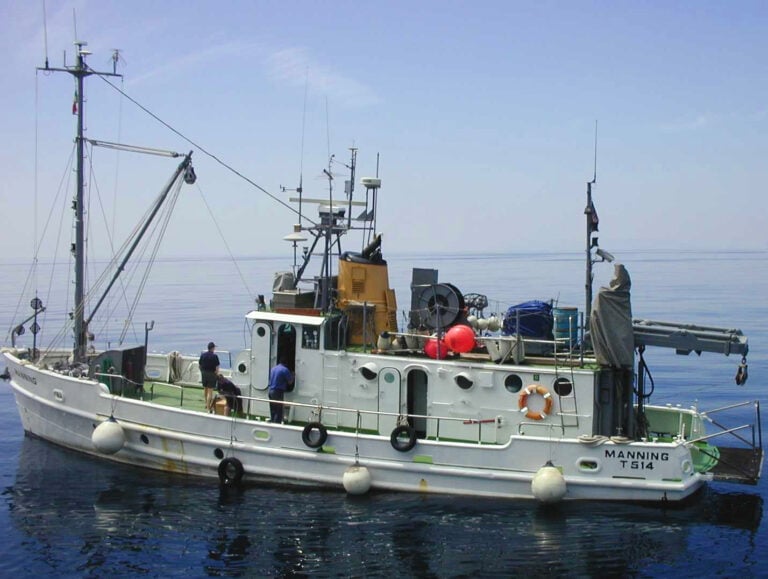
The Manning, a T-Boat built in 1954 for the U.S. Army, joined the SACLANTCEN fleet on loan from the U.S. government. Manning was used extensively in sheltered or coastal water operations for acoustic experiments, deployment and recovery of instrumentation, diving operations, and testing and calibration of equipment. The forward hold, with an area of 20m² was fitted out as a laboratory. The vessel would later work in conjunction with NATO Research Vessel Alliance.


The SACLANT ASW Research Centre was renamed the SACLANT Undersea Research Centre to reflect its expanded scope beyond its original anti-submarine warfare mandate. This change acknowledged growing expertise in broader undersea research, including active and passive sonar, coastal water regions, advanced oceanography, environmental acoustics, and system concept formulation.
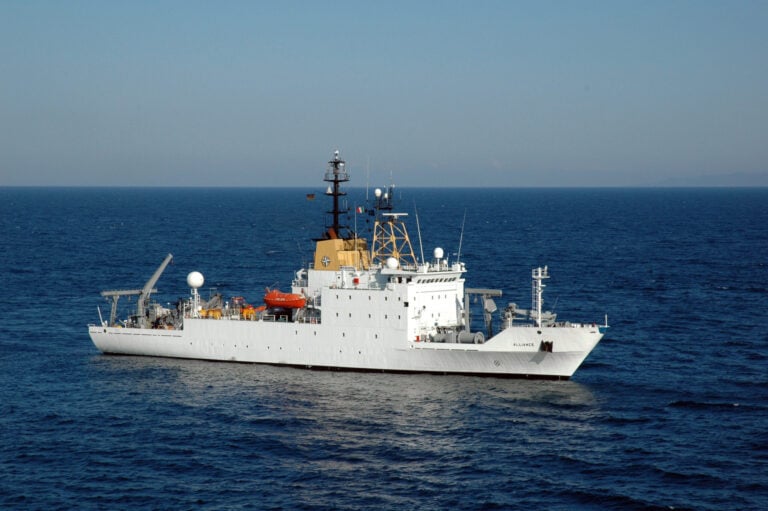
The NATO Research Vessel (NRV) Alliance was commissioned for the SACLANT Undersea Research Centre. The design priority for this ship was the reduction of ship radiated noise. This advanced ship quickly earned its reputation as one of the quietest vessels afloat, optimized for sensitive underwater acoustics research. Its low-noise propulsion and instrumentation enabled groundbreaking at-sea experiments critical to NATO's undersea warfare capabilities.

During the 1990s, the SACLANT Undersea Research Centre pioneered the concept of low-frequency active sonar for anti-submarine warfare and made significant advances in the area of high-frequency and small-scale acoustics for mine countermeasure applications.

The Coastal Research Vessel (CRV) Leonardo was commissioned for the SACLANT Undersea Research Centre. This agile and quiet vessel enhanced shallow-water operations, complementing the NRV Alliance's deep-sea capabilities for NATO experiments. Its specialized design, including laboratories located on the main deck, supported critical coastal acoustics and oceanographic trials amid post-Cold War maritime challenges.


The SACLANT Undersea Research Centre was renamed the NATO Undersea Research Centre (NURC), reflecting its maturing role in NATO's scientific portfolio. The Centre assumed a pioneering role in developing synthetic aperture sonar technology and the use of underwater autonomy, by advancing enabling technologies such as underwater communications, onboard intelligence, and collaboration between autonomous underwater systems. The name change underscored NURC's leadership in undersea networking technologies amid evolving maritime threats.


The NATO Undersea Research Centre was renamed the Centre for Maritime Research and Experimentation (CMRE), and became an executive body of the NATO Science and Technology Organization (STO). The refreshed mission centered on organizing and conducting maritime scientific research, technology development, and experimentation to deliver innovative, field-tested solutions to address the evolving maritime defence and security needs of the Alliance.
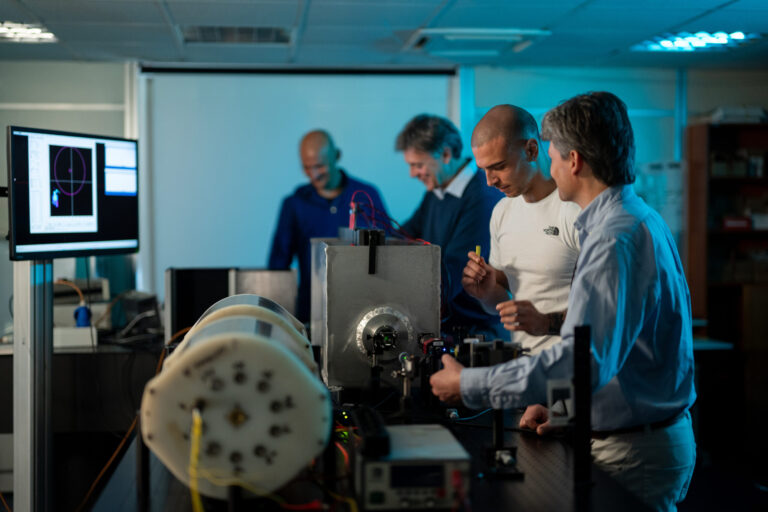
During this decade, the CMRE in La Spezia plays a vital role in harnessing and countering emerging and disruptive technologies that are reshaping our security environment. The Centre is pioneering innovative solutions powered by quantum computing, artificial intelligence, robotics, and next-generation underwater acoustics. CMRE has intensified focus on protecting critical infrastructure from emerging threats, while also advancing research to counter unmanned underwater systems, drifting mines, underwater positioning and navigation, secure maritime communications, and ensuring operational effectiveness in a changing environment.