Emerging and Disruptive Technologies for Autonomous Anti-Submarine Warfare
FUNDING BODY: NATO ALLIED COMMAND TRANSFORMATION
The submarine threat to NATO and the NATO Nations is greater now than at any time over the last four decades. Russia is investing in new submarines, which are far stealthier—and therefore difficult to detect and track—than their Soviet-era counterparts. During the Cold War, NATO Nations made substantial investment in ASW technologies and platforms, but such high-end maritime warfighting capabilities gradually ebbed away post-1989 as NATO focussed on Non-Article 5 Crisis Response Operations. However, a robust NATO deterrence and defence posture in the current strategic environment of re-emergent Russian submarine forces means that NATO must now build capacity in state-of-the-art ASW capabilities, with the right force mix comprising of both exquisite manned platforms and maritime unmanned systems (MUS).
The outputs of the EDT for ASW Programme enhance the Alliance’s ability to counter submarine threats in blue water and shallow water environments by:
- Developing new advanced sensing technologies and AI-enabled signal processing and incorporating them into maritime platforms
- Improving the adaptive and cooperative behaviours of autonomous multi-vehicle networks; and,
- Exploiting sophisticated operations research and operational analysis techniques to optimise the tactical use of an ASW system-of-systems network of conventional crewed assets and autonomous uncrewed systems, thereby maximising its overall performance to detect, classify, localise and track submarines
The ASW capabilities developed under this programme are tested at sea during NATO exercises and dedicated sea trials. Additionally, CMRE researchers rapidly adapted and deployed in June 2025 a network of unmanned systems as part of ACT’s Task Force X initiative to support NATO’s BALTIC SENTRY enhanced vigilance activities.

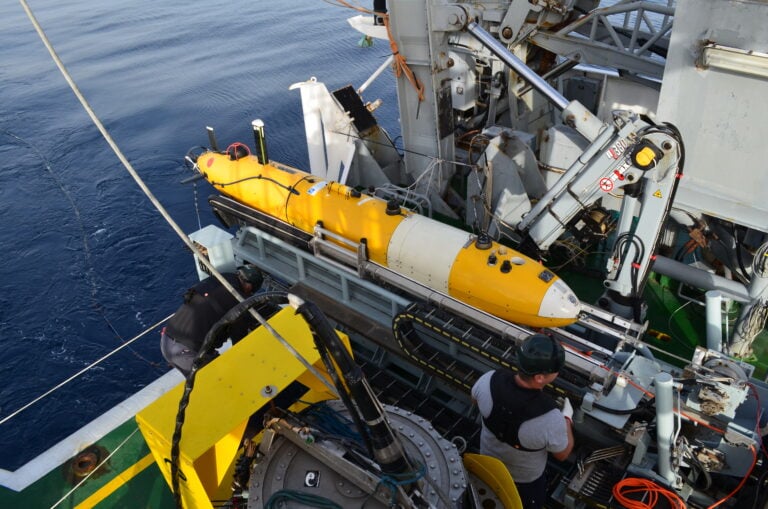
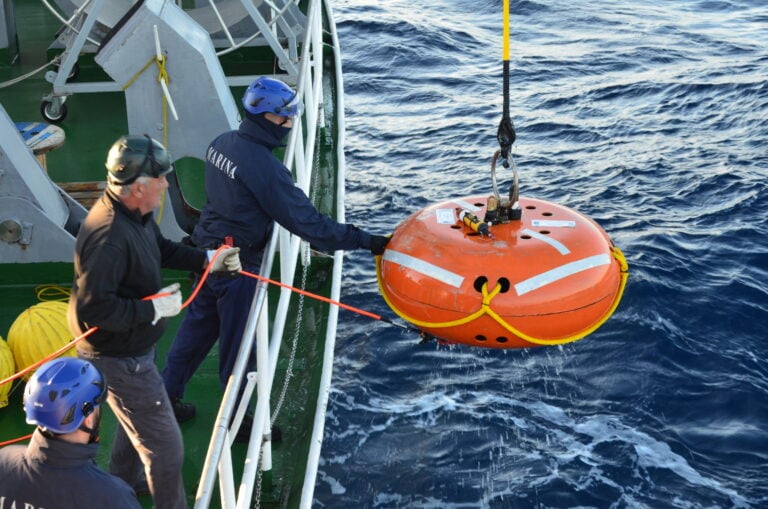
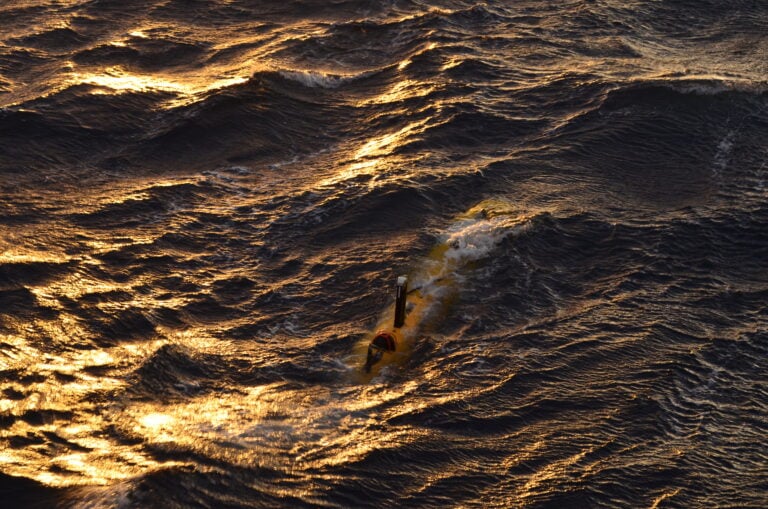
COLD 25 highlighted the value of effective cooperation between operational commands and scientific research. The collaboration with CMRE, supported by the participation of an Italian Navy submarine, enabled the assessment of emerging technologies in an operationally relevant environment and contributed to the development of undersea capabilities.
Rear Admiral Milazzo, Head of the Submarine Division, Italian Navy, General Staff Commander of the Italian Submarine Forces
Support to DRDC
FUNDING BODY: DEFENCE RESEARCH & DEVELOPMENT CANADA (DRDC)
A memorandum of understanding (MOU) between DRDC and CMRE was established in 2016 to achieve combined maritime research and development objectives through collaboration and access to each other’s resources.
The aim of the activities carried out under this MOU in 2025 was to investigate future concepts and enabling technologies for the use of uncrewed systems deployed from crewed vessels to execute Canadian Armed Forces anti-submarine warfare (ASW) missions of the future, with a particular focus on Arctic operations. The scope of uncrewed systems included aerial, surface and sub-surface vehicles, either autonomous or remotely piloted.
The three stands of study carried out during 2025 were related to:
Support to DRDC
FUNDING BODY: DEFENCE RESEARCH & DEVELOPMENT CANADA (DRDC)
- Traditional and innovative ASW sensing and processing techniques applicable to the operation of uncrewed ASW sensors, as compared with traditional ASW sensing from crewed surface platforms: active/passive variable depth sonar and helicopter-deployed sonobuoys. Processing techniques included active and/or passive classification exploiting machine learning e.g. neural network architectures.
- The design of experiments to demonstrate the advantages and disadvantages of potential uncrewed systems, and critical system requirements.
- Operations research studies to analyse different concepts of employment of multiple uncrewed ASW systems and how they compare with traditional crewed ASW capabilities. These OR studies examined aspects such as number of uncrewed systems, sensors, coverage area, speed, service rates—including re-charging time, crewing/maintenance support, cost, speed of advance, endurance, etc.