Maritime Unmanned Systems Enablers
FUNDING BODY: NATO ALLIED COMMAND TRANSFORMATION
Research under the CMRE MUSE programme enables the effective employment of NATO autonomous systems, and focuses on aspects of interoperability and modelling and simulation (M&S).
Work under Interoperability Standards and Security (ISS) for Maritime Unmanned Systems (MUS) focussed on the development of NATO STANAG 4817, which establishes a comprehensive framework for the multi-domain command and control (C2) of unmanned systems. CMRE is lead author of Volume III addressing MUS. The new draft version of STANAG 4817 has been implemented in the Centre’s Command and Control for Maritime Robotic Exploitation (C3MRE) infrastructure, deployed during Task Force X BALTIC SENTRY activities, and the REPMUS, DYNAMIC MESSENGER and CWIX exercises.
Maritime Unmanned Systems Enablers
FUNDING BODY: NATO ALLIED COMMAND TRANSFORMATION
Activity under Modelling and Simulation is developing Digital Twin capabilities to investigate the optimal employment of unmanned assets combined with manned platforms in NATO maritime operations. Included in the simulation are live data from different sources, mission planning and optimization algorithms, various platform signatures such as acoustic, magnetic, IR, etc, and mission vignette simulations.
A new version of STANAG 4748 on digital underwater signalling—the JANUS physical standard—was released in 2024, and in 2025 the JANUS Support Team (JST) was initiated under CMRE lead to foster standardization of underwater communications and networking across the Alliance.
Quantum Communication, Navigation, and Computing
FUNDING BODIES: NATO ALLIED COMMAND TRANSFORMATION AND THE NATO SCIENCE AND TECHNOLOGY ORGANIZATION, OFFICE OF THE CHIEF SCIENTIST
A key emerging and disruptive technology, Quantum Technologies (QT) offer both strategic opportunity and potential threat. A breakthrough in quantum sensing, communication, or computation has the potential to enhance significantly the warfighting capabilities of Allies, but if deployed by an adversary against NATO, it could severely compromise NATO’s military strategy and technological advantage. NATO must lead, and not follow, in QT.
CMRE continues to expand its QT research activities, which in 2025 focussed on quantum communications, navigation and computing.
- Quantum communications. CMRE staff are developing secure communication methods that leverage quantum principles. One aspect being investigated is Underwater Quantum Key Distribution (UQKD), which enables the exchange of keys via individual photons. However, a deep understanding of how light behaves underwater is needed. In 2025, CMRE researchers, in collaboration with other stakeholders, carried out an at-sea experiment to explore the effect of water waves on the polarization state of light
- Quantum navigation. The accuracy of inertial navigation—critically important in environments where satellite navigation is impossible or denied—can be enhanced using quantum magnetometers to detect subtle variations in the Earth’s magnetic field. An at-sea trial in October 2025 examined the potential of this concept in an operational context.
- Quantum computing. CMRE operates NATO’s first quantum computing laboratory. Pertaining to the application of quantum computing in the maritime domain, CMRE researchers developed and fielded a prototype Quantum Navigation algorithm, which is a potential game-changer for precise navigation.
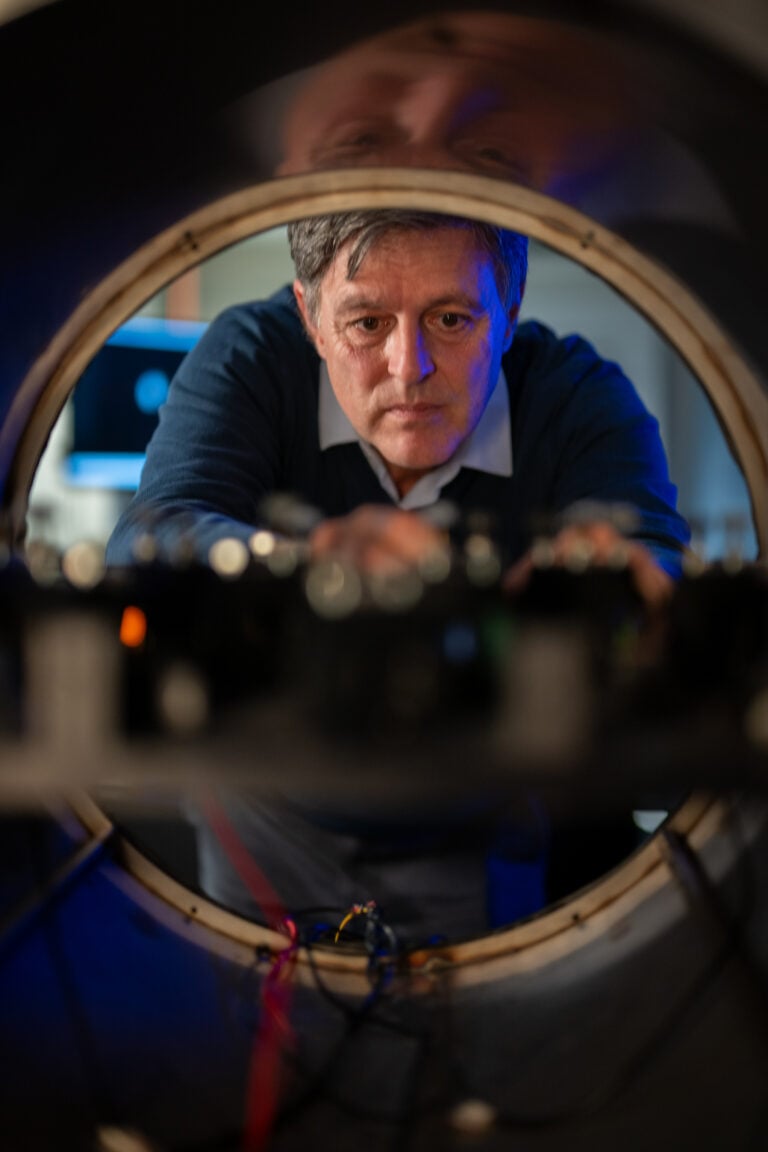
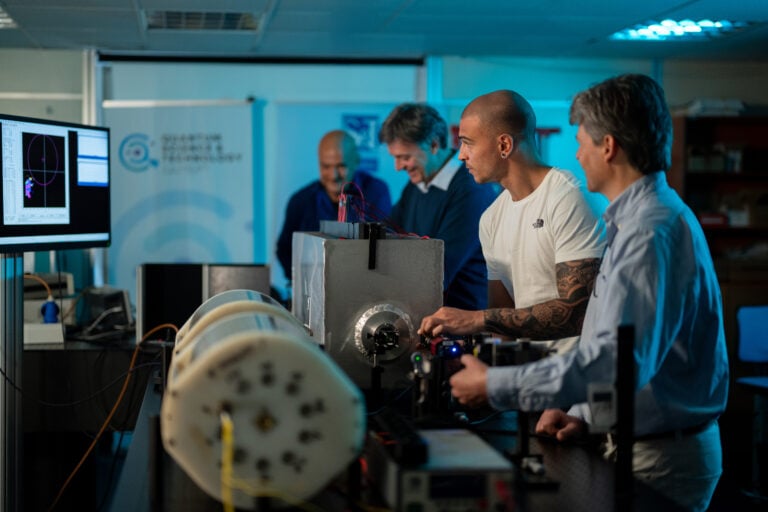
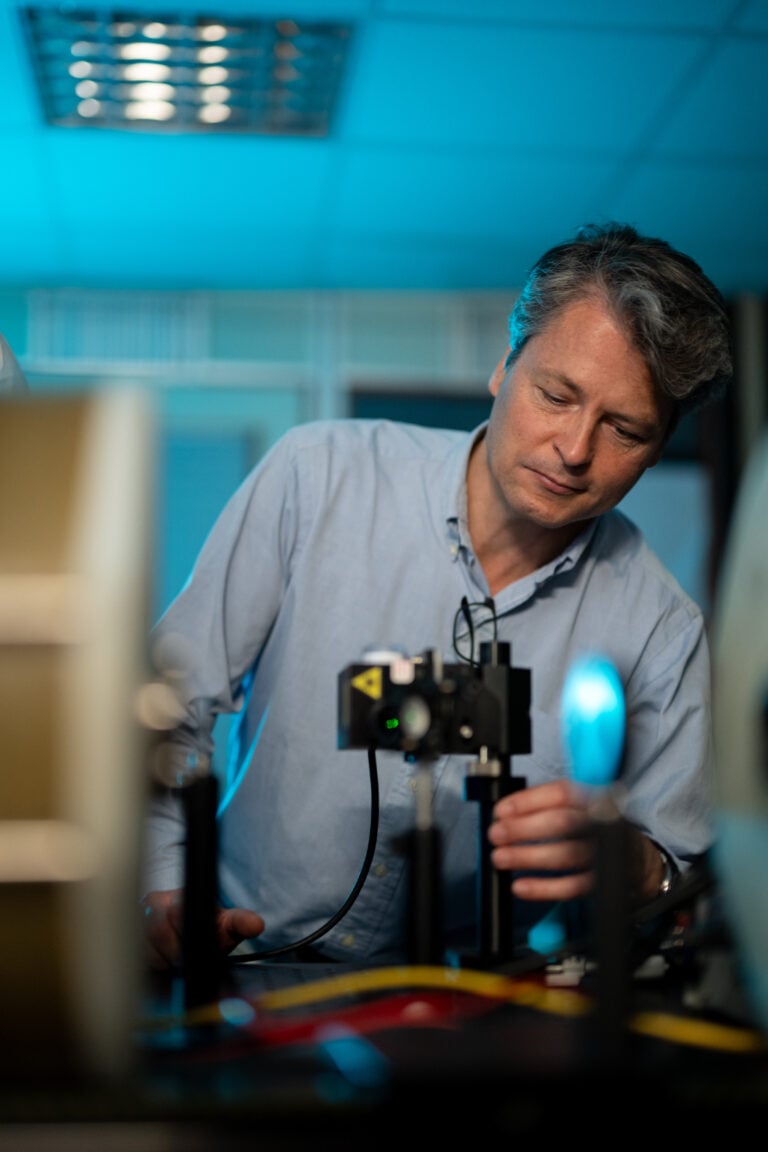
Special recognition is extended to [the Centre for Maritime Research and Experimentation, for its] leadership, team spirit and dedication to the IC 2025 Quantum Cluster demonstration 7, focusing on Quantum sensing using magnetometry sensors. The performance of [the Centre’s representative] was truly remarkable and greatly enhanced the impact of Innovation Continuum 2025 on advancing development of Emerging and Disruptive Technologies for Warfare Development.
Major General Juan Jose Soto Rodriguez, ESP A, HQ Supreme Allied Commander Transformation Directorate of Multi - Domain Force Development
Complex Holistic Outline Based Interoperable Network for underwater simulation
FUNDING BODY: ITALIAN MINISTRY OF DEFENCE
The Complex Holistic Outline Based Interoperable Network (CHOBIN) for underwater simulation project is a demonstrator of a multi-system underwater warfare scenario simulator developed for the Italian Navy Centro di Supporto e Sperimentazione Navale (CSSN) in La Spezia, Italy. The aim of the CHOBIN demonstrator is to support the testing, evaluation, verification and validation (TEVV) of heterogeneous autonomous underwater systems, platforms, and related operational analysis studies. The simulation is compliant with the NATO high-level architecture (HLA) standard, such that it can be part of a federation of NATO simulators and systems, and implements the interoperability standards developed under NATO Standardization Agreement (STANAG) 4817.
Complex Holistic Outline Based Interoperable Network for underwater simulation
FUNDING BODY: ITALIAN MINISTRY OF DEFENCE
In 2025, CMRE staff implemented user priorities and requirements specified by the CSSN customer, and released the CHOBIN v1.1 prototype. Additionally, hardware and commercial-of-the-shelf (COTS) software specifications were defined for a rugged portable CHOBIN set up.
Immersive Environments for Improved Spatial Awareness on Securing CUI
FUNDING BODY: NATO DEFENCE AGAINST TERRORISM PROGRAMME OF WORK
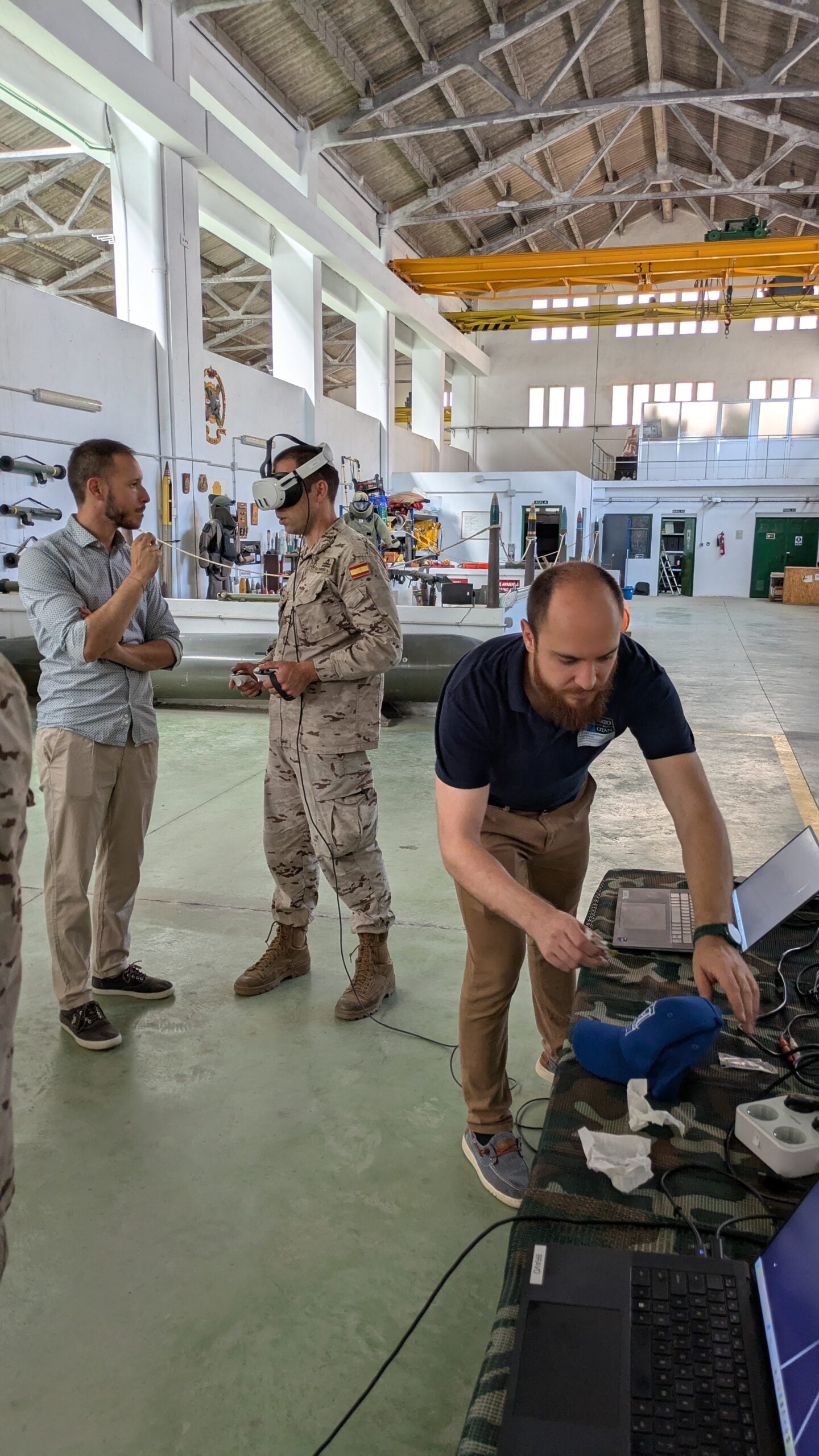
Since 2019, the CMRE Modelling and Simulation (M&S) team has been developing an immersive virtual reality (VR) environment to enhance the situational and spatial awareness of divers and unmanned underwater vehicle (UUV) operators conducting explosive ordnance disposal (EOD) operations. This system also aids in the planning and execution of missions to monitor and secure harbours and critical undersea infrastructure (CUI).
Funded by the NATO HQ Defence Against Terrorism Programme of Work (DAT PoW), the prototype VR environment has undergone several development iterations. During 2024, it was deployed in exercises CUTAWAY and OLIVES NOIRES, with the CMRE M&S team receiving much valuable feedback and observations from the operational community. Based on this experience, in 2025 the CMRE project team implemented new functionalities and integrated simulation capabilities to recreate more realistic environmental conditions. Additionally, new CUI and harbour protection scenarios have been produced.
In June 2025, the CMRE team participated in a workshop organised by Spanish Navy Diving Unit (CBA, Centro de Buceo de la Armanda) and the Mine Countermeasures (MCM) Diving Unit (UBMCM, Unidad de Buceo Medidas Contra Minas), and demonstrated the Immersive VR Environment prototype to a total of 25 participants.

Digital Ocean Wargame
FUNDING BODY: NATO HQ INTERNATIONAL STAFF DEFENCE INVESTMENT DIVISION
NATO’s Digital Ocean Vision is a key strategic initiative approved by the North Atlantic Council to enhance Alliance seabed-to-space situational awareness in the maritime domain through the use of low-cost systems, sensors and data sources.
As part of this pioneering initiative, a NATO digital war game was held in June 2025, which offered participants the opportunity to test and compare next-generation systems alongside traditional naval platforms, such as frigates, corvettes, maritime patrol aircraft and submarines. Designed to measure and compare how emerging disruptive technologies perform, the war game’s findings directly supported NATO’s Task Force X, and enhanced the Alliance’s overall deterrence and defence posture.
CMRE staff contributed to the design and development of the war game with respect to emerging and disruptive technologies (EDTs) for maritime operations, with an emphasis on the challenges posed in critical undersea infrastructure (CUI) protection scenarios. Such contributions included:
- The revision, refinement, and feedback on the rules of the war game.
- The design of the cards that summarised the capabilities of unmanned systems potentially available for the players to employ.
- The design of the war game questionnaires, which were used during execution to collect structured feedback from the participants.

Analysis of Quantum Key Distribution Application for Secure Underwater Communications
FUNDING BODY: NATO SUPREME HQ ALLIED POWERS EUROPE
Current concepts for maritime warfare operations increasingly involve distributed networks of manned and unmanned system-of-systems. For underwater warfare operations and the protection of critical undersea infrastructure, the effective employment of networks of assets—such as sensors, autonomous vehicles, submarines, ships, etc.—requires secure free-space underwater communications.
CMRE researchers have been investigating Underwater Quantum Key Distribution (UQKD) systems for secure underwater communications. Such systems exchange keys via individual photons, and are capable of distributing a secret key to both stationary and moving nodes of an underwater network.
Analysis of Quantum Key Distribution Application for Secure Underwater Communications
FUNDING BODY: NATO SUPREME HQ ALLIED POWERS EUROPE
Using several different real-life operational scenarios, this study focussed on the applicability of UQKD from a user perspective, highlighting its potential benefits, as well as investigating and trying to overcome the technology’s limitations and vulnerabilities.