Environmental Knowledge and Operational Effectiveness
FUNDING BODY: NATO ALLIED COMMAND TRANSFORMATION
During the Cold War, NATO and the Allies put considerable effort into observing and recording the oceanographic environment of the North Atlantic, Greenland Sea, Barents Sea and Norwegian Sea areas, and modelling the way that sound propagates through complicated sea water structures, interacting with both the sea surface and the sea floor. The reason why so much effort was expended was because the principal way that NATO anti-submarine warfare (ASW) platforms could detect submarines is by using underwater acoustics, or sonars, both passive—that listen for sounds, and active—that transmit sound energy and then listen for an echo. The performance of NATO ASW capabilities could, and can, be optimized through detailed knowledge of the undersea environment.
After the end of the Cold War, NATO’s focus was on Non-Article 5 Crisis Response Operations, and there was a general loss of interest in keeping NATO’s knowledge of oceanographic conditions in the North Atlantic up to date. However, the re-emergence of the Russian submarine force and their threat to NATO’s deterrence and defence strategy means that there is now a critical, urgent need to regenerate NATO’s ASW capabilities. Unfortunately, in the years between the end of the Cold War and today, the global climate has changed a significantly, and in the High North climate change effects are probably the most noticeable globally. The outcome: much of NATO’s historical oceanographic knowledge—so painstakingly built over decades—is largely redundant.
In this context, the CMRE EKOE programme observes, analyses and models the undersea environment in the context of NATO ASW operations in the strategically important North Atlantic Ocean, Greenland Sea, Barents Sea and Norwegian Sea area. In addition, autonomous capabilities for rapid environmental assessment (REA) are developed.
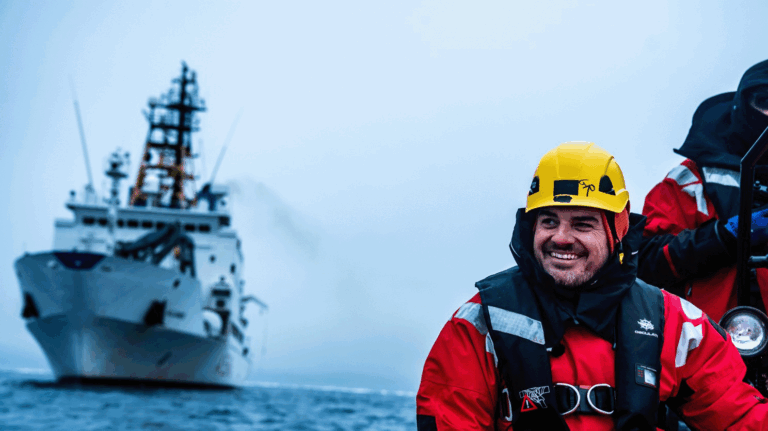
In July 2025, the CMRE EKOE team completed the Nordic Recognised Environmental Picture 2025 (NREP25) trial on-board NRV Alliance in the Greenland Sea, successfully collecting environmental data for acoustic modelling purposes. Additionally, data from previous NREP trials was analysed in detail to support the forecasting of ASW sonar performance.
In support of REA, additional sensors were fitted to an autonomous undersea glider for the collection of environmental data influencing the propagation of sound. CMRE researchers also tested and delivered a data-driven model—exploiting symmetries and linearity—to estimate ASW sonar detection ranges from a minimal, sparse set of observations, collected by a passive acoustic network of sonobuoys, maritime uncrewed systems, etc.
We are focused on a hard truth: a changing physical environment directly threatens the backbone of our military capabilities. NATO’s Climate Change & Security programme combines academic debate with pragmatic survival, equipping planners with the 'eyeglasses' to identify future vulnerabilities today. By grounding our courses and workshops in CMRE’s scientific reality, including data-driven case studies and table top exercises, we provide our military staff with the tools necessary to adapt and safeguard NATO’s missions to any climate future.
Col. Giancarlo Turco, NATO International Military Staff - Policy and Capability Division, responsible for the Climate Change and Security – Effects on Military Operations and Net Assessment
The CMRE Climate Change & Security Programme has played an integral role in defining and positioning the NATO community in the field of climate security. Starting with their early efforts to convene the relevant stakeholders, CMRE hosted the first workshop on climate data and analysis, in La Spezia in April 2025, bringing together representatives from across the Alliance and spurred efforts across the community to organize follow-on work. CMRE also co-led efforts to organise a NATO climate change and security course in Fall 2025, leveraging their knowledge and network to raise awareness on this important issue across the Alliance and beyond. Continued involvement from the CMRE Climate Change & Security Programme will be crucial to furthering these efforts, and their unique expertise (defence research, climate science) will continue to effectively serve the NATO climate security community. We are proud to closely cooperate with such a professional and dedicated team.
Mathieu Bussières, Director NATO Climate Change and Security Centre of Excellence
Climate Change and Security Analysis
FUNDING BODY: NATO SCIENCE AND TECHNOLOGY ORGANIZATION, OFFICE OF THE CHIEF SCIENTIST
Climate change is shaping the geopolitical environment, leading to potential instability and geostrategic competition, creating conditions that may be exploited by state and non-state actors that threaten or challenge the Alliance. It affects NATO security, impacting the effectiveness, efficiency and safety of NATO armed forces executing NATO operations and missions both in the Euro-Atlantic area and in the Alliance’s broader neighbourhood.
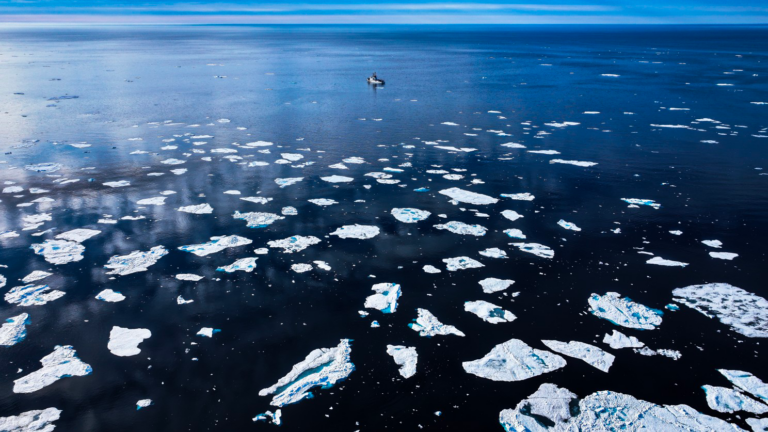
With particular reference to the maritime environment, NATO armed forces and coastal infrastructure face higher temperature extremes, rising sea levels, melting ice sheets, significant changes in precipitation patterns and extreme weather events. The High North represents possibly the most concerning epicentre of climate change for NATO, although there exist several other climate hot-spots, such as the Mediterranean basin. In the Arctic Ocean, the receding and thinning of the sea ice—which has occurred in the past decades—is resulting in ice-free areas thereby providing new navigation routes opportunities, especially in the summer. In the winter, however, sea ice still covers the High North, and submarines remain the platform of choice for maritime operations. Anti-submarine warfare (ASW) capabilities predominantly operate passive and active acoustic sensors for submarine detection, and forecasting performance requires carefully curated estimations of the spatial—horizontal and vertical—and temporal variations in underwater sound speed and ambient noise levels.
NATO Arctic Climate underwater Observatory and Analysis
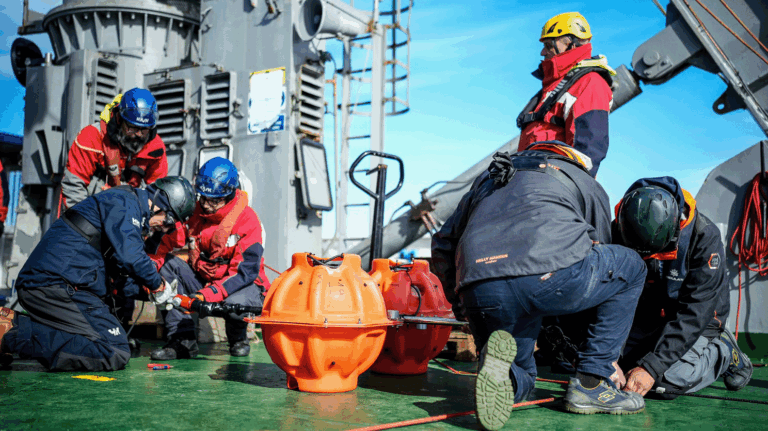
In 2025, CMRE researchers continued studies into Arctic transformation addressing the ongoing and future changes in the High North maritime domain. The long-term NATO Arctic underwater Climate Observatory (NACO) was first established in the Fram Strait and northern Norwegian Sea in 2023. During the ACO25 trial in July 2025, CMRE researchers and engineers embarked on NATO Research Vessel Alliance to maintain CMRE NACO deepwater moorings, each hosting several oceanographic and acoustic sensors positioned within the water column, continuously recording temperature, salinity, current and sound at hourly intervals. Three new moorings were deployed in the central Fram Strait, west of Svalbard Islands, and offshore North Norway. The oceanographic and acoustic data collected over previous years was analysed, and used to carry out a preliminary study on how to assess shipping noise in the Arctic in the context of climate change.

Exploring very high-resolution climate simulations
Currently available outputs from global climate models are too coarse in both space and time resolutions to accurately simulate underwater sound speed fields. Consequently, producing more realistic simulations of projected sound speed fields would allow for significant advances in the assessment of future ASW sonar performance. CMRE researchers have developed a CMRE Pan-Arctic model for ocean-sea ice forecasts at high spatial and time resolution. In 2025, the model was validated using the data collected at the NACO mooring sites.
Forecasting standardized climatological products
CMRE researchers have applied climate datasets from multiple sources to provide a picture of possible future climate conditions in several regions of interest for NATO’s deterrence and defence posture. A pre-processing methodology was developed to increase the accuracy, robustness, and resolution of the climate datasets, with several bias correction methods evaluated in order to select the most appropriate one for each climate parameter. The corrected datasets were used to calculate—for the near-future period of 2030-2050—30 specific climate indicators on the list of standardized climatological products used within Allied Command Operations (ACO) to support NATO operations planning and execution.