Autonomous Naval Mine Warfare
FUNDING BODY: NATO ALLIED COMMAND TRANSFORMATION
Naval mine warfare (NMW) is probably one of the most cost-effective forms of maritime warfare, and is an archetypal example of both an asymmetric threat and a ‘loitering’ munition. During the first Gulf War in 1991, USS Princeton actuated a Manta mine costing few tens of thousands of dollars that removed a two-year old $2 billion asset—and the coalition force’s primary threat-sector anti-air warfare ship—from the fight.
The threat posed by naval mines is as relevant today as it has ever been, as witnessed by both Ukraine and Russia laying mines in the Black Sea during Russia’s illegal war in Ukraine. And similar to their land counterparts, once deployed, mines rarely respect the international laws of armed conflict, and will target both military and commercial shipping.
Active naval mine countermeasures (MCM)—operations to remove mines—are difficult, slow and very dangerous. So the CMRE’s NMW Programme focuses on developing novel sensors to detect naval mines more effectively, especially in difficult environments, increasing the speed of operations by using multiple unmanned systems cooperating with each other, and increasing safety by using autonomous systems, thereby removing the human operator from the minefield.
Research under the NMW Programme improves the Alliance’s ability to counter naval mines using autonomous uncrewed networked capabilities. Research is carried out along the following strands:
- Developing an autonomous, sensor-agnostic framework for the identification of detected naval mines.
- Ensuring that the common NATO framework for the multi-domain command and control (C2) of uncrewed systems—NATO Standardization Agreement (STANAG) 4817—incorporates relevant aspects for the C2 of autonomous mine countermeasures systems
- Developing a standardised NATO sonar data exchange format
- Demonstrating above water and underwater capabilities for detecting and identifying drifting mines using different sensor payloads, supported by at-sea trials
- Refining a physics-based simulator to model the performance of acoustic mine sensing systems
- Investigating optimal mine search strategies for minehunting operations after an initial coverage of an area
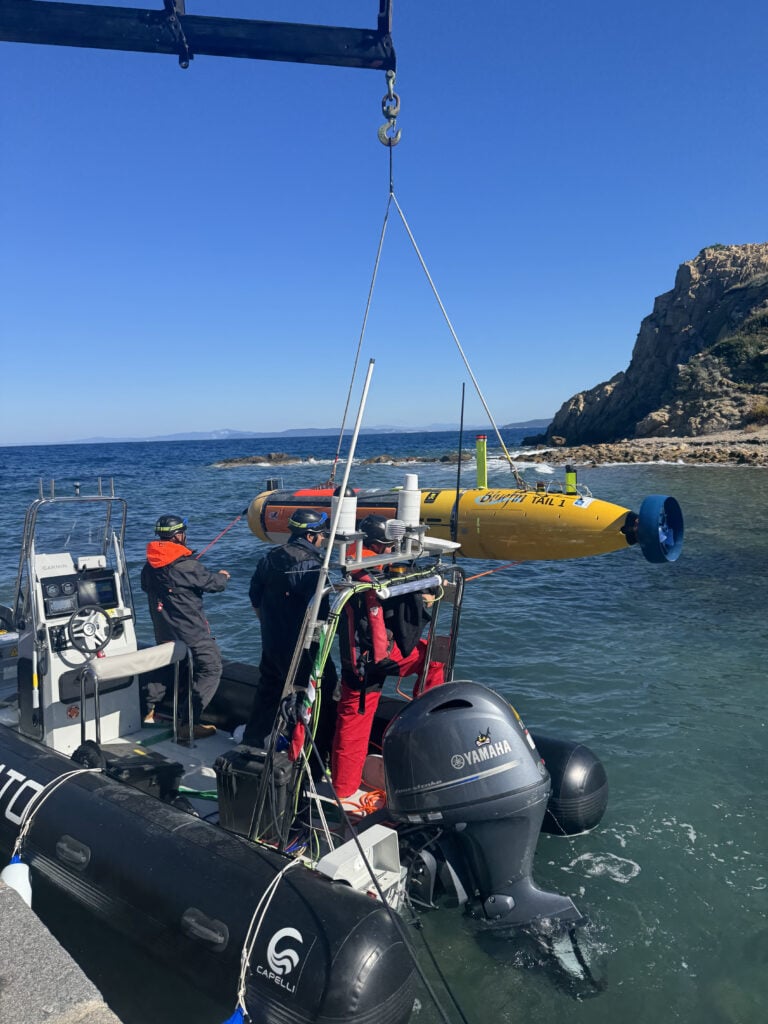
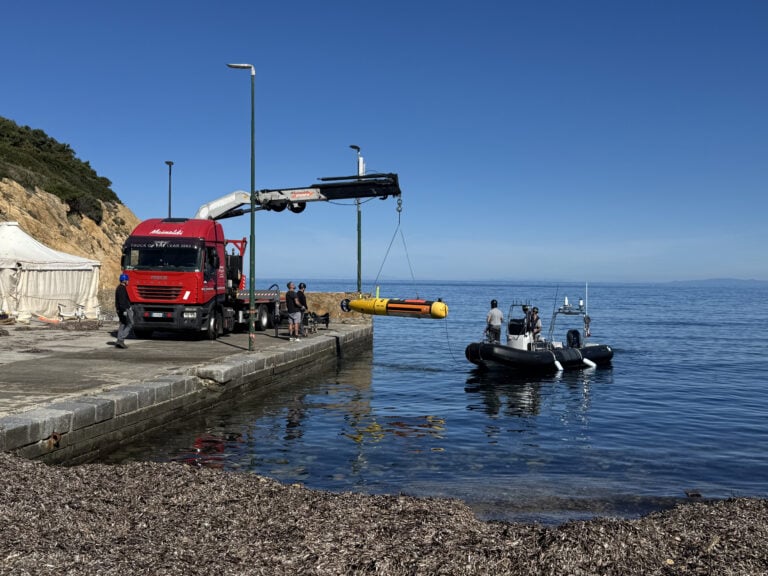
During 2025, the CMRE ANMW team organised the SEPIEX25 dedicated at-sea trial to collect scientific data to support the automatic recognition of naval mine targets by new sonar technologies. A total of 23 external participants representing seven NATO Nations participated in the trial. CMRE researchers also deployed to Sesimbra, Portugal to participate in the Robotic Exploitation Prototyping Maritime Unmanned Systems (REPMUS) 25 and the NATO DYNAMIC MESSENGER (DYMS) 25 exercises to demonstrate the capability of an unmanned aerial vehicle (UAV) systems to detect, identify and track drifting naval mines.

Countering Unmanned Vehicles
FUNDING BODY: NATO ALLIED COMMAND TRANSFORMATION
In light of recent incidents in Europe and learning from the extensive use of drone warfare in Russia’s illegal war in Ukraine, NATO is committed to implementing additional measures to expand NATO’s capabilities in detecting, tracking, and neutralizing UxVs effectively. This Counter-UxV project aims to contribute to this initiative by examining potential countermeasures to maritime unmanned surface vehicles (USV) and unmanned underwater vehicles (UUV), in order to protect NATO warships and critical maritime infrastructure.
CMRE researchers analysed the current state-of-the-art regarding the use of UxVs in a military context. A comprehensive literature review was carried out that examined the maturity of UxV technologies and the potential threat posed to NATO naval forces and maritime infrastructures. Current and near-future sensor solutions for UxV detection and tracking at tactically relevant ranges have been investigated, together with the soft- and hard-kill technologies to neutralise threat UxVs in the maritime domain.
Countering Unmanned Vehicles
FUNDING BODY: NATO ALLIED COMMAND TRANSFORMATION
The CMRE team engaged with the NATO naval operational community to witness—at sea in an exercise scenario—the current challenges to NATO naval forces when confronted with hostile UxV behaviour. Finally, a detailed review of real-life experience of the use of UxVs in the maritime domain was performed.