Interoperability Technology Demonstrations
FUNDING BODY: NATO ALLIED COMMAND TRANSFORMATION
Technology demonstrations (tech demos) are an opportunity for CMRE to showcase—in a relevant environment with military operators—the state of the art scientific research and development carried out under the ACT Maritime S&T Programme of Work. Not only do the demonstrations provide an opportunity for military operators to engage with emerging technologies, but also they are an opportunity to receive feedback from the operational community about those technologies. Furthermore, tech demos are a way to sustain the transition of maturing technologies to NATO Nations and their industries, fostering interoperability and standardization across the Alliance.
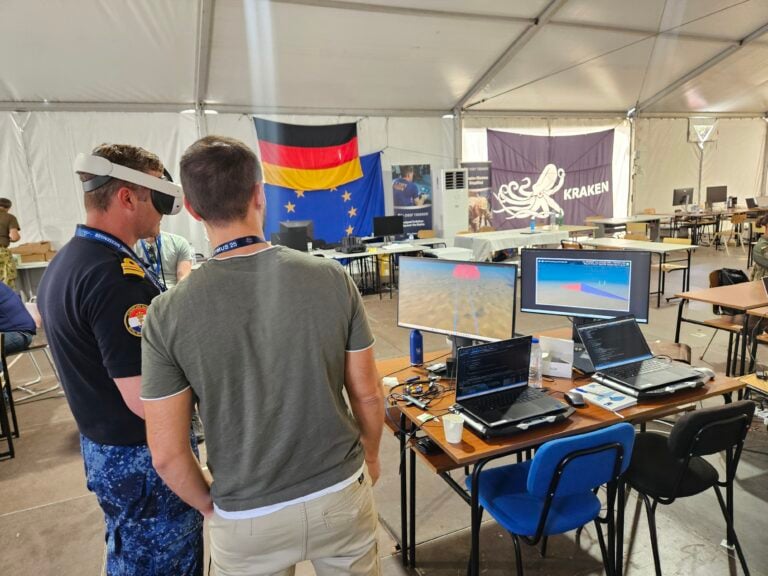
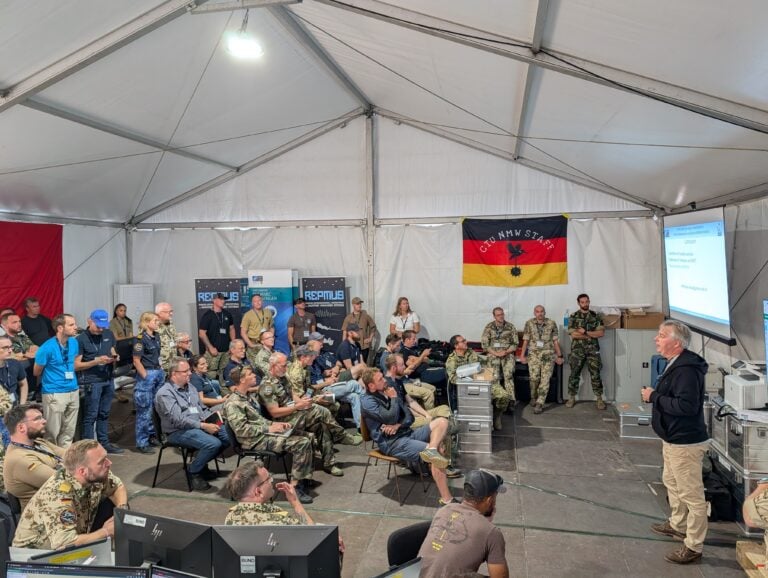
Under the sponsorship of ACT, CMRE staff participated in the Portuguese Robotic Exploitation Prototyping Maritime Unmanned Systems (REPMUS) 25 and NATO DYNAMIC MESSENGER (DYMS) 25 exercises conducted in the Atlantic littorals west of Setubal and the Tróia peninsula in September 2025.
REPMUS is an annual Portuguese-led experimentation exercise which focuses on maritime unmanned system (MUS) experimentation, capability development and interoperability, with the aim of promoting the integration of MUS into NATO maritime operations. Operational experimentation (OPEX) events engage operational communities, NATO and national research centres, industry and academia. Systems and experimental tactics are tested during sea trials designed to address key operational problems.
Immediately following REPMUS25, DYMS25 was a live NATO large-scale OPEX exercise conducted by Allied Maritime Command (MARCOM) to promote the operational integration of MUS into NATO maritime operations through the development and testing of doctrine, tactics, techniques and procedures (TTP), and by operationally evaluating MUS employment options.
CMRE deployed and successfully demonstrated the following capabilities:
- The CMRE-developed Command Control and Communications for Maritime Robotic Exploitation (C3MRE) infrastructure, which provided HQ Allied Maritime Command (MARCOM) staff with a common operational picture (COP) for the whole REPMUS/DYMS, and supported vehicle command and control (C2) connectivity compliant with NATO Standardization Agreement (STANAG) 4817—Interoperable Command and Control (C2) of Multi-Domain Unmanned Platform Control Systems. More than 200 platform/sensor nodes connected from all domains, with several thousand messages processed every minute.
- The prototype CMRE Naval Minewarfare (NMW) Data Fusion Cell capability, which acted as the data management hub for all exercise NMW data.
- The CMRE ASTROFLY unmanned aerial vehicle (UAV), with on-board automatic target recognition (ATR) capabilities for detecting and classifying floating mines.
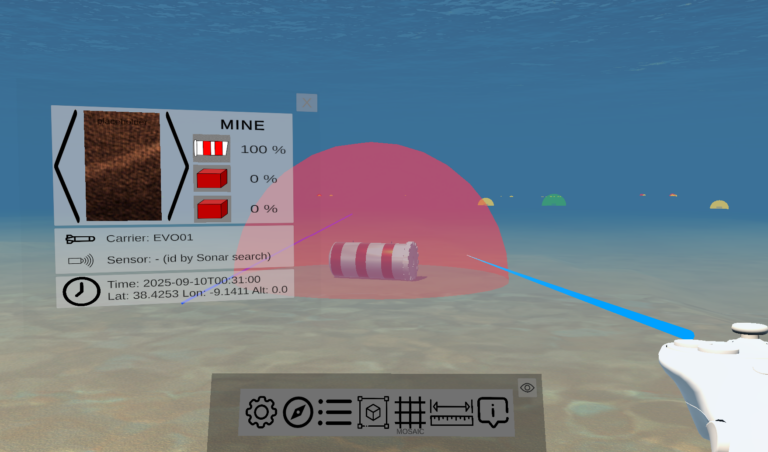
- An immersive modelling and simulation (M&S) environment capability for mission planning, monitoring and execution.
- The Mainsail tool, which successfully demonstrated capabilities for the protection of critical undersea infrastructure (CUI) by integrating multi-source data to detect and alert operators to anomalous behaviour by vessels in the vicinity of exercise CUI.

Experimentation and Demonstration at Innovation Continuum
FUNDING BODY: NATO ALLIED COMMAND TRANSFORMATION
The NATO Innovation Continuum is a strategic initiative led by ACT, in participation with Academia, Industries, and Nations, that aims to accelerate the adoption of emerging and disruptive technologies within the Alliance. The Innovation Continuum aligns and focuses coherent Innovation efforts, from initial sighting of possible projects and technologies to the demonstration of opportunities in the framework of a technology experimentation platform. The 2025 ACT Innovation Continuum culminated with the demonstration/experimentation Shared Platform for Innovative Solutions’ Evaluation (SHINE) event, hosted by Istanbul Technical University’s Maritime Faculty in October 2025. CMRE scientists, engineers and technologists participated in the vignettes executed within three of the SHINE event’s syndicates:
- In the Multi-Domain Operations Syndicate’s Next-Generation intelligence, surveillance and reconnaissance (ISR) experiment, CMRE staff supported the use of NATO Standardization Agreement (STANAG) 4817 to enable the command and control (C2) and data exploitation of heterogeneous maritime unmanned systems (MUS) across domains.
- In the Quantum Syndicate, CMRE staff demonstrated quantum-effect magnetometer-aided precision navigation and timing (PNT) techniques.
- In the AI and Autonomy Syndicate, CMRE staff deployed an aerial drone, which—autonomously—successfully detected, tracked and reported the location of naval mines drifting on the sea surface.


CWIX, Dynamic Messenger, and Operational Analysis
FUNDING BODY: NATO ALLIED MARITIME COMMAND
NATO Allied Maritime Command (MARCOM), with its HQ in Northwood UK, is the central command of all NATO maritime forces, and Commander MARCOM is the primary maritime advisor to the Alliance. MARCOM is part of Allied Command Operations (ACO) and has operational command of NATO’s standing naval forces: two Standing NATO Maritime Groups (SNMG) comprised of destroyers, frigates and corvettes; and two Standing NATO Mine Countermeasures Groups (SNMCMG) of minehunters and minesweepers. HQ MARCOM staff are responsible for planning and conducting NATO’s live maritime exercises. As NATO’s only maritime research facility, the CMRE maintains strong links with MARCOM. In direct support to MARCOM, CMRE staff provide operational analysis (OA) experts and tools for the detailed analysis of maritime exercises. COM MARCOM also recognises the critical importance of assuring interoperability across the Alliance for the command, control and communication (C3) of emergent national maritime unmanned systems (MUS). CMRE’s activities supporting MARCOM provide opportunities for the NATO operational community to gain experience and confidence with emerging and novel technologies, and, reciprocally, allow the CMRE’s researchers and technologists to gain knowledge of maritime operations and current challenges. Against this background, in 2025 CMRE supported MARCOM in the following strands of work:
- Participation in the 2025 edition of Allied Command Transformation’s (ACT) annual Coalition Warrior Interoperability eXploration, eXperimentation, eXamination eXercise (CWIX) with the objective of enhancing the integration and interoperability of multi-domain unmanned vehicles with existing NATO and National Command and Control (C2) systems.
- Together with funding from ACT, participation in NATO Exercise DYNAMIC MESSENGER 2025 (DYMS25) with respect to the interoperability, security and standardization of MUS.
- Providing ongoing support for Mainsail operations, encompassing user interface and user experience enhancements and bug fixes, along with hardening and production readiness activities.
- Conducting expert OA for the detailed analysis of specific trials carried out as part of NATO naval mine countermeasures (MCM) exercises.
CWIX25
CWIX is NATO’s annual premier digital interoperability testing exercise. Led by HQ Supreme Allied Command Transformation (HQ SACT), CWIX is operationally driven and technically supported to meet Alliance and Partner Nation interoperability validation and verification (IV&V) requirements. Through CWIX, the NATO enterprise, Allies and Partner Nations test interoperability among fielded, near-fielded, and experimental C2 capabilities.
NATO Standardization Agreement (STANAG) 4817—Interoperable Command and Control (C2) of Multi-Domain Unmanned Platform Control Systems—assures the integration and interoperability of multi-domain unmanned vehicles with NATO and National C2 systems. CMRE staff are actively engaged in the development part of STANAG 4817 and are part of the STANAG 4817 Command Team. As such, CMRE staff have created several command, control, and communications (C3) services for maritime unmanned systems (MUS), which are part of the CMRE Command, Control and Communications for Maritime Robotic Exploitation (C3MRE) toolkit. C3MRE services were successfully tested in CWIX25 networks, making use of simulated data and also integrating a live feeds of data. These live feeds included information from several tens of assets operating in the Baltic—including NATO Task Force X (TFX) multi-domain unmanned systems, the NATO Research Vessel (NRV) Alliance, and CMRE unmanned systems—and Automatic Identification System (AIS) contacts from shipping in areas of the Baltic region.

DYMS25
DYMS25 was a live NATO operational experimentation (OPEX) exercise designed to promote the operational integration of MUS into NATO operations through the development and testing of doctrine, tactics, techniques and procedures (TTP), and by operationally evaluating MUS employment options.
CMRE’s participation in DYMS25 successfully tested the version of STANAG 4817 developed during CWIX25 in a live NATO exercise operational experimentation (OPEX) environment. Three events were used to test the implementation of STANAG 4817 within the C3MRE toolkit. Within these events, data such as current position, course, and speed and contacts/tracks held was transmitted from each and every autonomous system operating in the exercise area to NATO C2 systems providing the common operational picture (COP). Additionally, all such data were transferred to the Coalition Shared Data (CSD) database—an initiative led by the NATO Communications and Information Agency (NCIA) designed to enable seamless intelligence sharing among Allies and partners—such that any staff element with access to CSD would be able to view the C3MRE data.
Expert OA Support
Minehunters in the two SNMCMGs regularly carry out specialist trials scheduled during NATO exercises. These trials are designed to determine how well ships’ staffs planned, executed, evaluated and reported naval minehunting operations. CMRE operational analysts provide HQ MARCOM staff with rapid-turnaround analyses of the overall performance of the NATO minehunting capabilities participating in the trials, which informs MARCOM and SNMCMG staffs on readiness levels and force planning requirements.


Three Octave Research Array
FUNDING BODY: PENNSYLVANIA STATE UNIVERSITY – APPLIED RESEARCH LAB
The NATO Innovation Continuum is a strategic initiative led by ACT, in participation with Academia, Industries, and Nations, that aims to accelerate the adoption of emerging and disruptive technologies within the Alliance. The Innovation Continuum aligns and focuses coherent Innovation efforts, from initial sighting of possible projects and technologies to the demonstration of opportunities in the framework of a technology experimentation platform. The 2025 ACT Innovation Continuum culminated with the demonstration/experimentation Shared Platform for Innovative Solutions’ Evaluation (SHINE) event, hosted by Istanbul Technical University’s Maritime Faculty in October 2025. CMRE scientists, engineers and technologists participated in the vignettes executed within three of the SHINE event’s syndicates:
- In the Multi-Domain Operations Syndicate’s Next-Generation intelligence, surveillance and reconnaissance (ISR) experiment, CMRE staff supported the use of NATO Standardization Agreement (STANAG) 4817 to enable the command and control (C2) and data exploitation of heterogeneous maritime unmanned systems (MUS) across domains.
- In the Quantum Syndicate, CMRE staff demonstrated quantum-effect magnetometer-aided precision navigation and timing (PNT) techniques.
- In the AI and Autonomy Syndicate, CMRE staff deployed an aerial drone, which—autonomously—successfully detected, tracked and reported the location of naval mines drifting on the sea surface.


Bold Machina
FUNDING BODIES: NATO DEFENCE AGAINST TERRORISM PROGRAMME OF WORK AND NATO SUPREME HQ ALLIED POWERS EUROPE (SHAPE)
BOLD MACHINA (BOMA) 2025 was NATO’s Special Operations Forces’ Command (SOFCOM) premier operational experiment, designed to counter complex hybrid threats in the maritime domain and driving innovation. BOMA 25 brought together over 150 personnel from 15 Allied and two Partner Nation Special Operations Commands, NATO HQ staff, NATO’s Joint Capability Group on Maritime Unmanned Systems, CMRE staff, and over 20 industrial partners contributing advanced detection technologies. Participants included scientists, engineers, military specialists, and industry leaders, fostering mutual understanding to accelerate technological adoption to meet maritime defence operational needs.
CMRE staff:
- Contributed to the planning and organisation of BOMA25 in coordination with participating technical partners.
- Participated in the execution of the experiment, concurrently supporting four experiment vignettes.
- Analysed the collected data and drafted the final report to be delivered during 1Q 2026.
Additionally, based on the results obtained from participation in BOMA 2024, CMRE staff demonstrated Modelling and Simulation (M&S) prototypes that provide an immersive environment for SOF divers conducting missions related to the protection of critical undersea infrastructure.
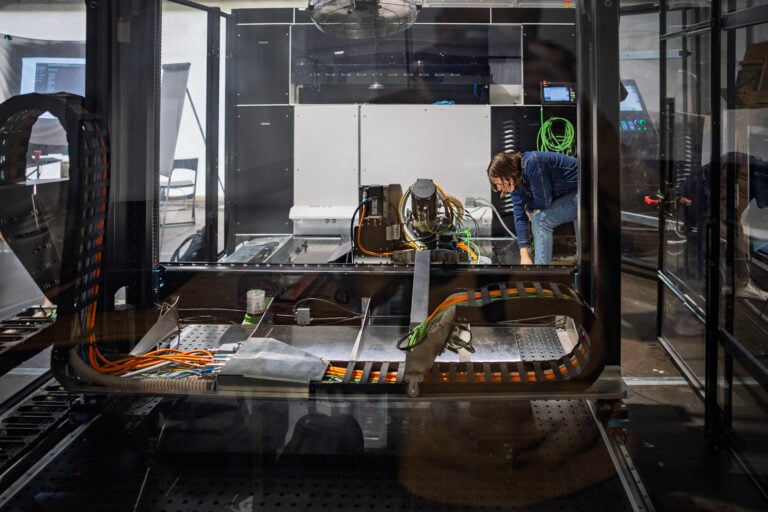
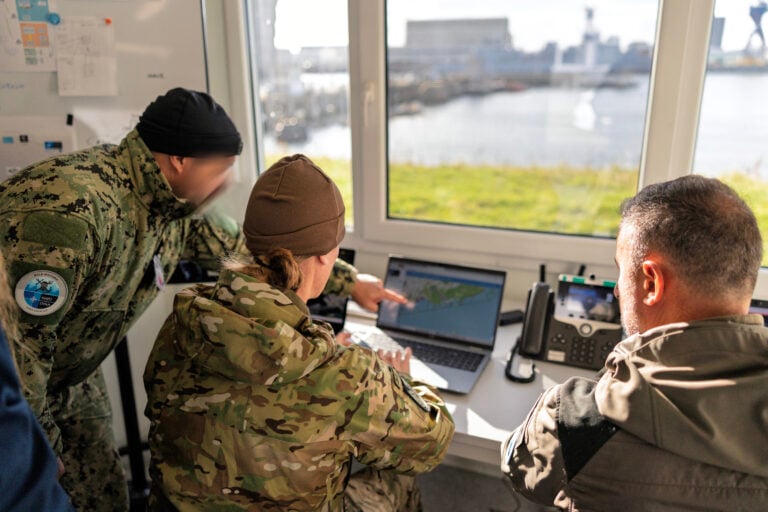
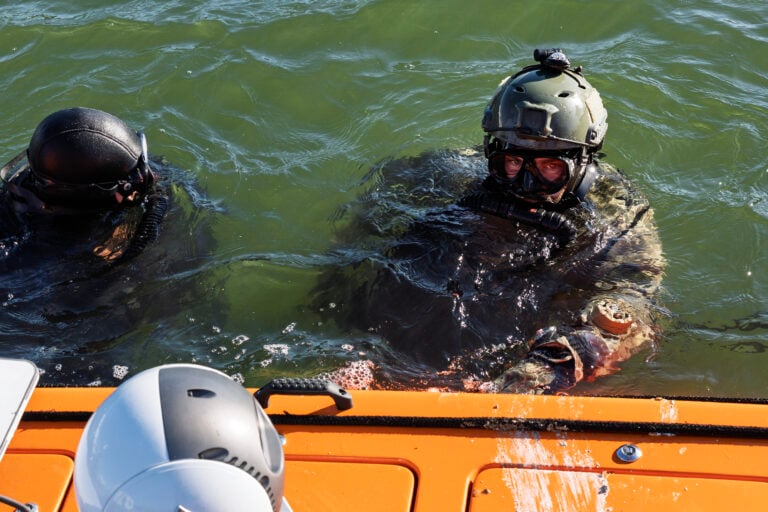
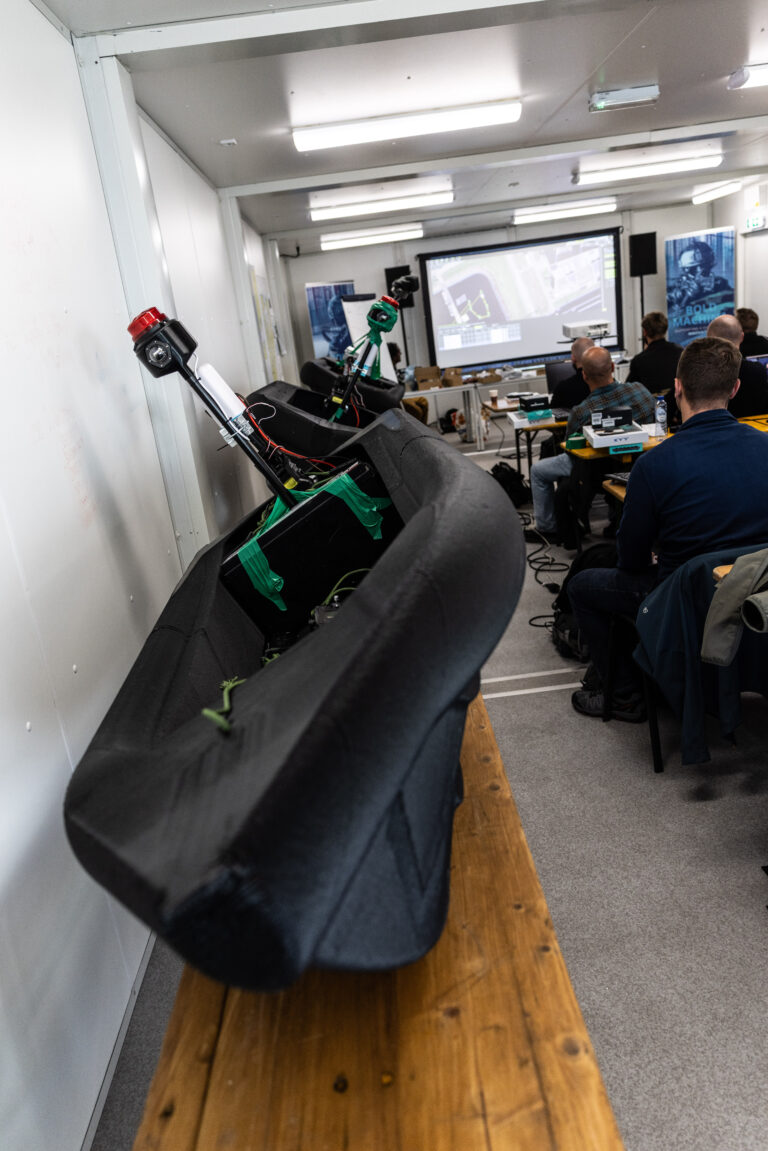
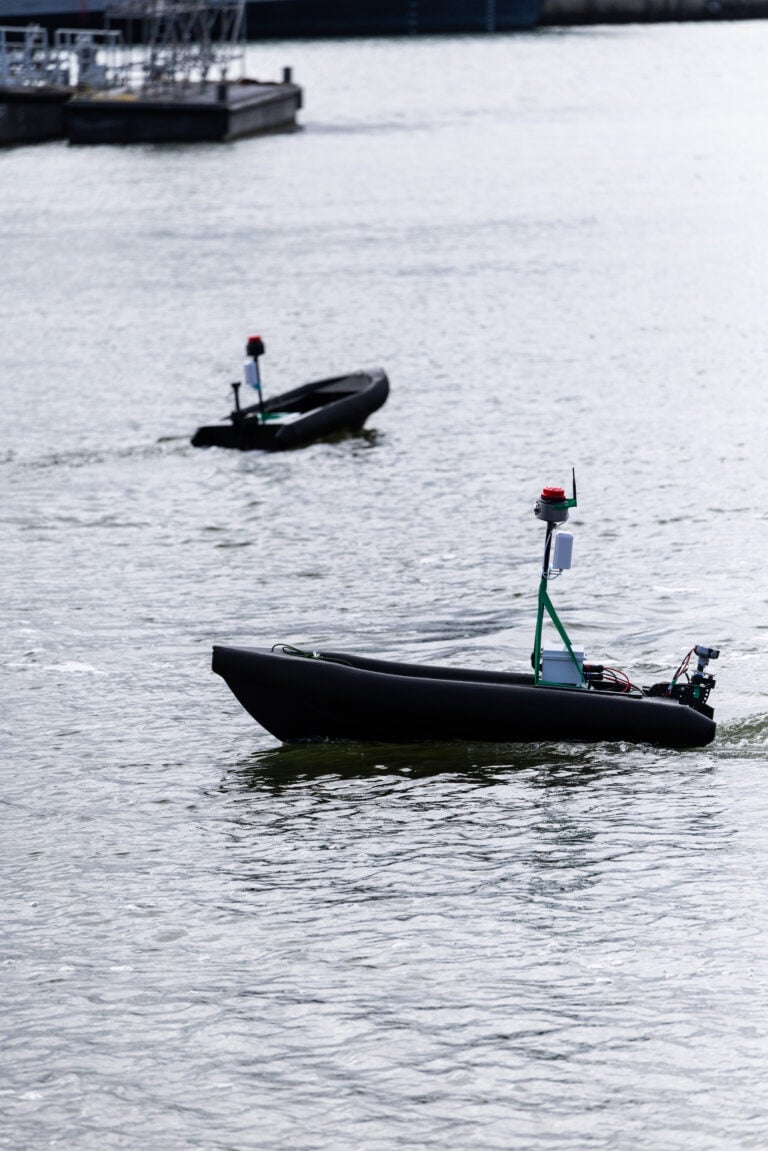
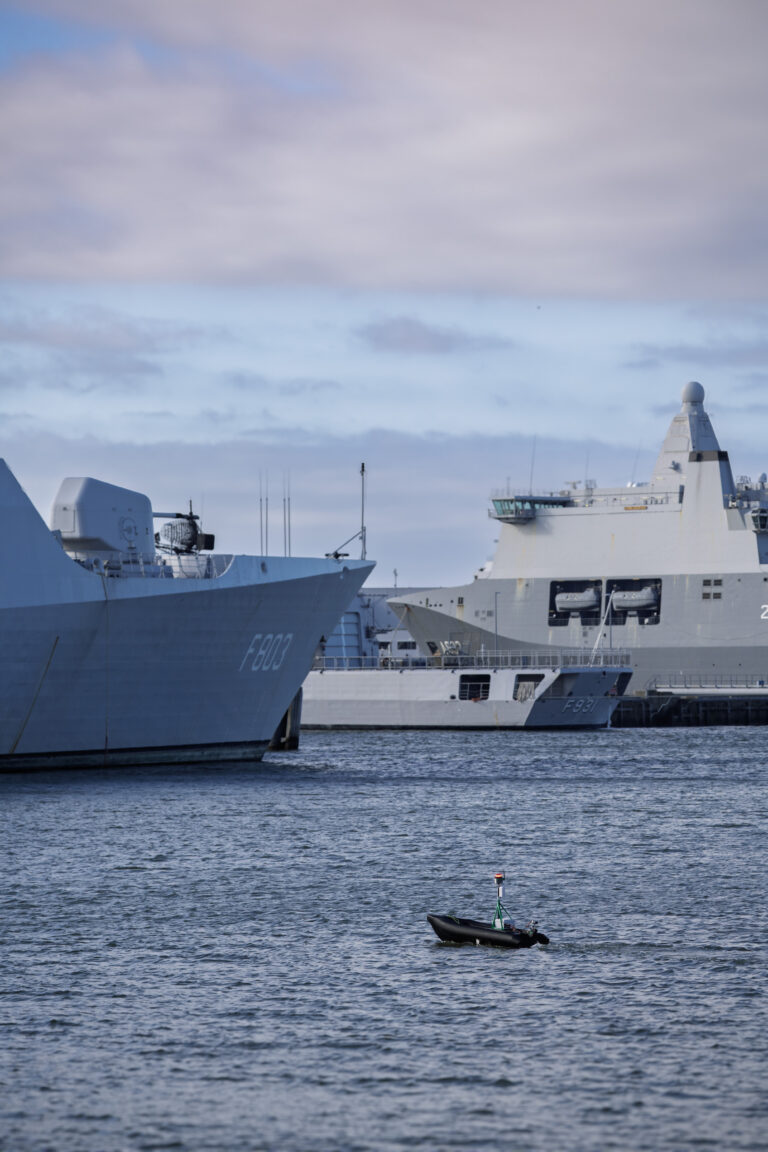
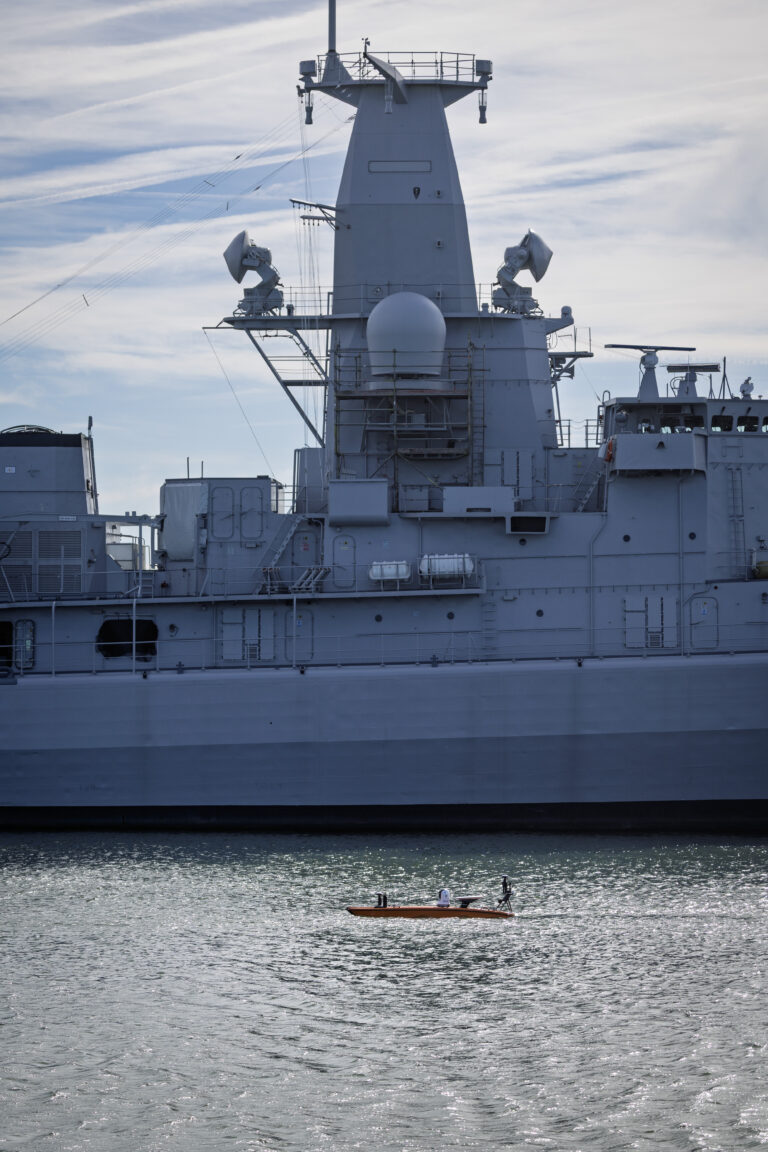
CMRE plays a vital role in strengthening NATO’s maritime Special Operations Forces by providing the scientific expertise, experimentation infrastructure, and analytical rigor needed to turn innovation into operational capability,” said Rear Admiral LH Massimiliano “Max” Rossi, Chief of Staff, Allied Special Operations Forces Command. “Through initiatives such as BOLD MACHINA 25, CMRE demonstrates how close collaboration with SOF operators, academia, and industry accelerates the adoption of uncrewed, autonomous, and digital solutions in contested maritime environments. Their work ensures that lessons from today’s conflicts are rapidly translated into interoperable, Alliance-wide capabilities—reinforcing NATO’s ability to deter, defend, and deliver decisive maritime SOF effects.
Rear Admiral LH Massimiliano Rossi, Chief of Staff, Allied Special Operations Forces Command